
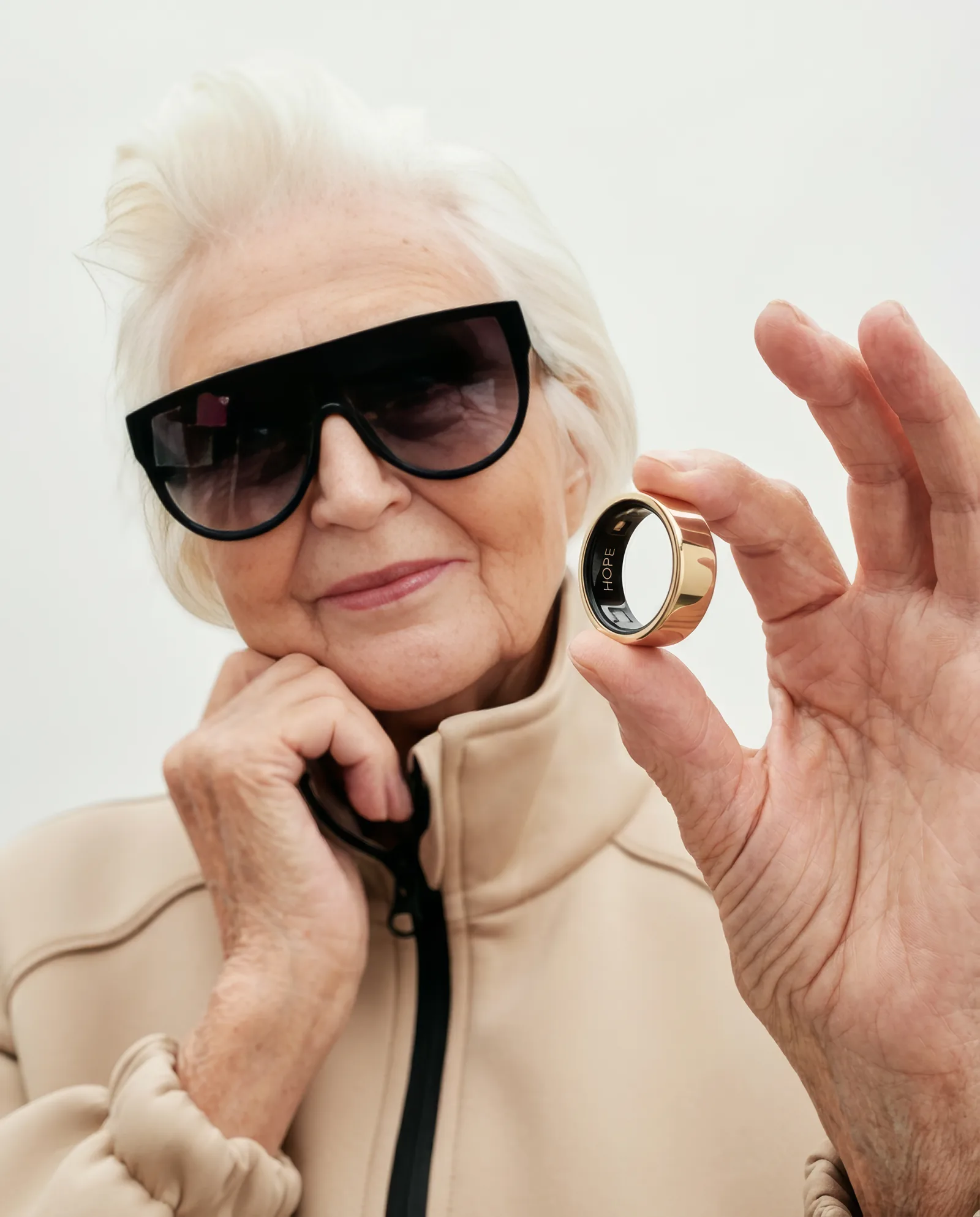
At HOPE, we believe safety should not depend on pressing a button.
For years, older adults, families and caregivers have relied on pendant alarms, watches and emergency buttons to respond after something goes wrong. These devices can help, but they also depend on one important thing: the person must be wearing the device, able to reach it, and able to press it at the right moment.
HOPE Ring was created around a different question:
What if a safety wearable could be discreet enough to wear every day, intelligent enough to recognise potential danger, and connected enough to alert the right people when help may be needed?
This is the story of how HOPE Ring began.
2023
The idea behind HOPE begins
The first version of HOPE started in 2023 from a simple but deeply human problem: families cannot always be there when an older loved one falls, becomes distressed or needs help.
Traditional emergency devices often look medical. Some people avoid wearing them because they feel visible, bulky or like a loss of independence. Watches can be useful, but they are not always worn at night, in the shower or during charging.
A ring felt different.
A ring is small, familiar and discreet. It can be part of someone’s everyday life without making them feel like a patient.
That became the foundation of HOPE:
A safety-first smart ring designed for fall detection, emergency escalation, health monitoring and trusted family and caregiver alerts.
From the beginning, HOPE was not designed as another fitness tracker. It was designed around care, safety and independent living.
2024
HOPE moves from concept to patent-filed innovation
In 2024, the HOPE concept moved into a more formal innovation stage, with patent filings covering smart-ring emergency response, continuous monitoring and caregiver escalation.
This was an important milestone because HOPE was never just about putting sensors inside a ring.
The bigger idea was a care pathway:
- A person wears the ring naturally throughout daily life.
- The ring monitors key signals and movement patterns.
- The system looks for events that may indicate a fall, distress or potential emergency.
- Trusted contacts, family members or caregivers can be alerted when help may be needed.
- The person can be supported without depending only on a pendant button or phone.
This approach shaped HOPE as a safety smart ring, not simply a wellness ring.
2025
Building the product around real care needs
In 2025, HOPE continued moving from idea to product.
The focus became clearer:
- fall detection and emergency awareness
- family and caregiver alerts
- continuous health monitoring
- simple daily wear
- home-based aged care
- independent living
- assistive technology pathways
We spent time understanding the real-world gap between what families need and what traditional devices provide.
Many families do not only want health data. They want reassurance.
Did Mum fall?
Is Dad okay at home?
What happens if no one is nearby?
What if they cannot press a button?
What if they do not want to wear a pendant?
How can family or caregivers be notified quickly?
These questions shaped the product.
HOPE Ring was designed to support the moments where silence can be dangerous—when a person may be alone, unable to call, or unable to explain what happened.
Why a ring?
A smart ring is not automatically better than a pendant, watch or medical alert device. Each option has a place.
But for many older adults, the biggest problem is not whether the technology exists. The biggest problem is whether they will actually wear it.
A ring has several advantages:
- it feels less medical
- it is discreet
- it can be worn naturally
- it does not require a screen
- it can support passive monitoring
- it may feel more acceptable for people who dislike visible alarms
This is why HOPE was built around the ring form factor.
The goal is not to replace every emergency device. The goal is to create a better option for people who need safety support but do not want to wear something that feels like a medical alarm.
The problem with button-only safety
Emergency buttons can help, but they also have limitations.
After a fall, a person may be unconscious, confused, injured, panicked or unable to move. In those moments, pressing a button may not be realistic.
HOPE is being built around a more proactive safety model.
Instead of depending only on the person to ask for help, HOPE is designed to recognise potential signs of danger and begin an alert pathway when needed.
Safety should not depend only on the person being able to press a button.
What HOPE Ring is being built to do
HOPE Ring is being developed as a safety-first smart ring for older adults, families and care providers.
The product is designed around:
- potential fall detection
- emergency escalation
- family and caregiver alerts
- continuous health monitoring
- discreet everyday wear
- independent living support
- care visibility between visits
- future assistive technology pathways
The goal is to help people stay independent for longer while giving families and caregivers better awareness when something may be wrong.
What makes HOPE different?
HOPE is not being built as a general fitness ring.
It is being built for care.
That difference matters.
Fitness rings usually focus on sleep, recovery, readiness, activity and wellness insights. HOPE is focused on safety, response and care escalation.
HOPE is being designed for people who may need support from others, including:
- older adults living independently
- families caring from a distance
- people with fall risk
- people who dislike pendant alarms
- home care clients
- care providers
- NDIS participants where suitable
- Support at Home clients where suitable
The ring is only one part of the system. The real value is the care network around it.
2026
Preparing for early access
As we enter 2026, HOPE is preparing for early access.
This next stage is about moving from development into real-world use with families, older adults and care pathways.
Our focus is on building carefully, testing responsibly and being honest about what the product can and cannot do.
Important: HOPE Ring is not a replacement for emergency services. It does not guarantee that every fall or emergency will be detected. Like any connected safety device, performance can depend on fit, battery, connectivity, sensor quality, user behaviour and the environment.
But we believe the direction is clear.
The future of personal safety should be more discreet, more proactive and more connected to the people who care.
That is what we are building with HOPE Ring.
Frequently asked questions
Questions about HOPE Ring
What is HOPE Ring?+
HOPE Ring is a safety-first smart ring being developed for fall detection, emergency escalation, continuous health monitoring and trusted family and caregiver alerts.
Is HOPE Ring a fall detection smart ring?+
Yes. HOPE Ring is being built as a fall detection smart ring designed to support older adults, families and care providers when a potential fall or emergency may occur.
Is HOPE Ring only for older adults?+
Older adults are one of the main groups HOPE is being designed for, but the broader vision includes people with fall risk, people living independently, families caring from a distance and care providers supporting clients at home.
Does HOPE Ring replace emergency services?+
No. HOPE Ring is not a replacement for emergency services, medical advice or professional care. It is designed to support awareness and alert trusted contacts when help may be needed.
How is HOPE different from a pendant alarm?+
Pendant alarms often depend on the person pressing a button. HOPE is being designed around discreet wear, potential fall detection, continuous monitoring and family and caregiver alert pathways.
When will HOPE Ring be available?+
HOPE is preparing for early access in 2026. More details will be shared in the next post introducing HOPE Ring 1.